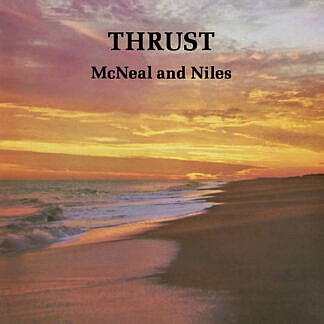
Thrust – McNeal & Niles
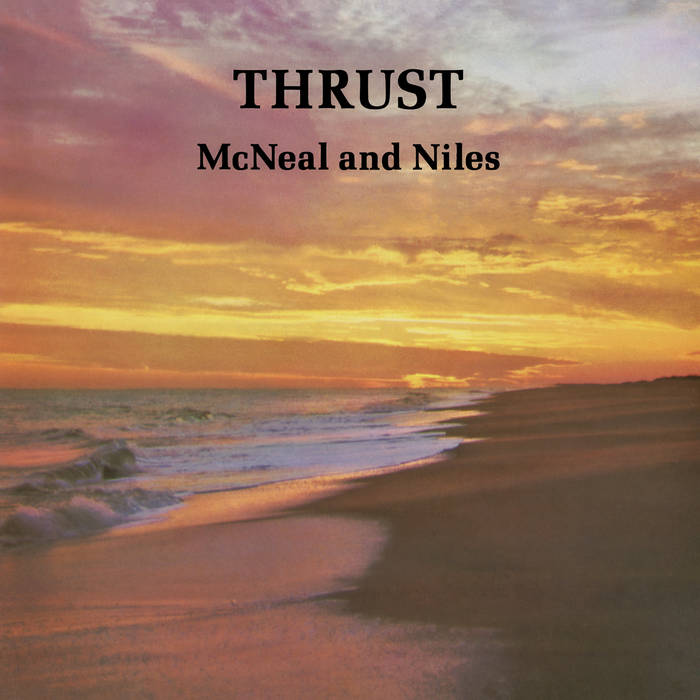
McNeal and Niles initially recorded their first album—limited to 500 copies—in Akron Ohio in the makeshift Man-Ray studios, which also happened to double up as a car wash. Barrels of soap and detergent were rolled out of the way to make space for the band and their equipment, an unknown assortment of names from the American Midwest, and Niles’ then girlfriend Machelle McNeal recording vocals and synthesisers. Thrust exists in the blurred space between jazz, funk, soul and R&B in which many homemade recordings from the late seventies occupied, the overall sound signature not too far away from the likes of the Iowa based Split Decision Band. After having been sampled by the likes of Pete Rock, original copies of the album on the little known Tinkertoo label have gone on to fetch upwards of $1,600 at auction.
The album starts with the track Ja Ja, titled after the African king who rose from slavery to become a wildly successful broker of palm oil in the 19th Century. The most obvious sample from the album, it is a hazy mixture of low-fi soul and slow jam grooves set to some ethereal synths and rocky progressions. Punk Funk is another album highlight, the contrast between its slick, oily bassline and Big Muff fuzz guitar encapsulate the title of the song, a blend of genres brought together with a rough, garage aesthetic almost in a similar sense to some of the west coast output: post punky in the shape of James White and the Blacks or Defunkt, albeit much slower in tempo. Quiet Isle is the most outwardly jazzy of the tracks, a low-slung and ethereal number with glinting percussion and soft washes of Wurlitzer.
Buy the LP HERE
Listen HERE
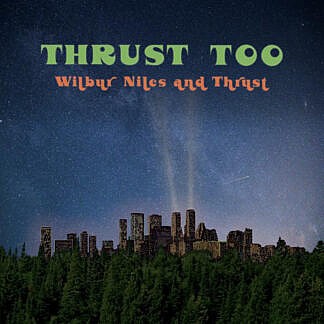
Thrust Too – Wilbur Niles and Thrust
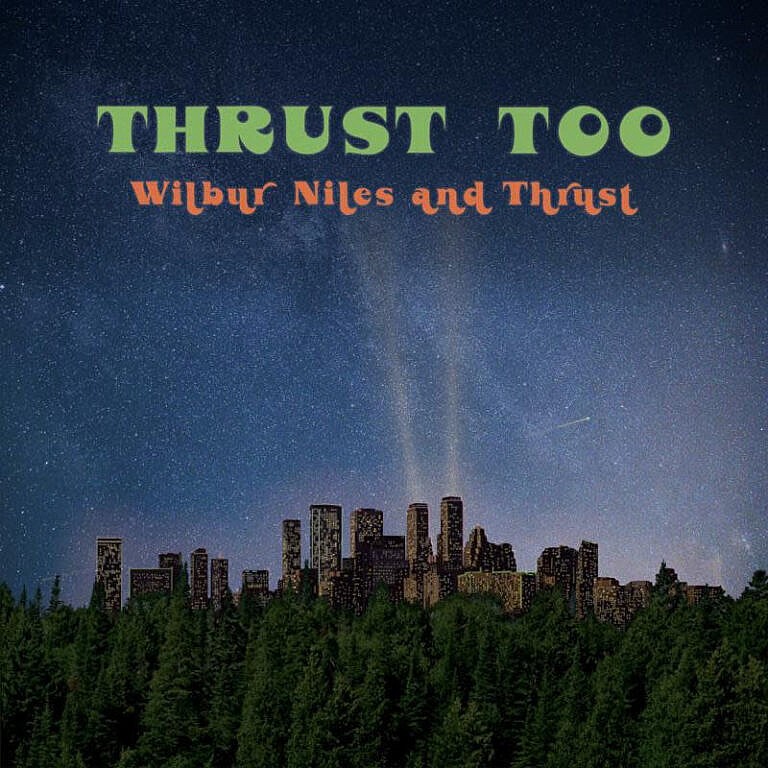
Thrust barely registered on the marketplace, mostly available in the Akron area. This didn’t deter Niles, who returned the following year with the impressive Thrust Too, in the eyes of many a musically heightened, tighter set, although one which commands lower prices than his freshman release. Recorded in slightly more salubrious settings in an upgraded studio used mainly for jingles, the music is well articulated and comparatively better layered than Thrust. The inclusion of tenor saxophone (Bob Freid) and more intricate percussion in the form of timbales, shakers and congas (John Mitchell) nourish a sense of sonic maturity.
The album begins with Hang Ten, a catchy tune that oscillates between a hook scored in 10/8 time and a samba section that harnesses a South American rhythmical energy, musical concepts that showed a clear progression in Niles’ playing since the Thrust days: a positive forward step in his musicality. Electric Earth is an upbeat exercise that sees some intricate fingering from Niles on guitar, alongside rattling percussion that amps up the tempo of the track. Machelle takes on the exact same chord progression as Roy Ayers’ Sugar, one of the groovier numbers of the set with some exited hand drumming from Niles alongside a muscular saxophone that rides the rhythm. First Time Home sounds eerily similar to Tarika Blue’s Dreamflower, which at nine minutes has plenty of time for the players to stretch out with elongated saxophone and guitar solos. Arguably the best-known track on the album is Survival of the Funkiest, a vocal track featuring Bootsy Collins-ish spoken work and Bernie Worrell styled synth bass, an undeniably funky track that sets the record straight on what funk is and isn’t. Let’s just say that Niles’ view of disco aligned clearly with George Clinton’s!
Buy the LP HERE
Listen HERE